Lladro Daisa Explained in Full
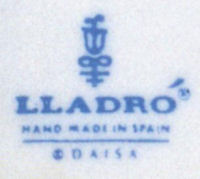
What is Lladro Daisa? The reference to DAISA is seen on the bottom of some Lladro figurines and some wonder what it means. There is a lot of bad information online and we will clear it up from authoritative legal documents.
In the 1990s “Lladro” sued Costco alleging the retailer was unlawfully selling Lladro figurines in the United States without first purchasing them from a Lladro affiliate. Costco won the lawsuit and Lladro was ordered to pay Costco’s legal fees. The case is Disenos Artisticos E Industriales, S.A. v. Costco, decided by the 9th Circuit Federal Court of Appeals in 1996 (97 F.3d 377). From the court records:
DAISA is an abbreviation of Disenos Artisticos E Industriales, S.A., a Spanish corporation.
Here is the Lladro hierarchy of companies and how the distribution and manufacture of Lladro figurines works (this information has apparently only been publicly disclosed via the court documents), or at least how the hierarchy and structure existed in the mid 1990s. It may have changed since then:
Lladro Comercial, S.A. is the parent company at the head of the Lladro empire.
Lladro Comercial, S.A. owns several subsidiary companies, through which it owns DAISA.
Interestingly, DAISA owns the copyright to the Lladro figurines, not the ultimate parent company.
Also of interest, neither DAISA nor the parent Lladro company make the Lladro figurines and products. Instead, DAISA licenses the right to make the figurines to four different manufacturers. The manufacturers have the ability to directly sell the figurines they make to anyone in the world. However, instead of doing this they sell the figurines back to the parent company Lladro Comercial.
The parent company then sells the figurines to various retailers and distributors worldwide.
For sales in the United States, Lladro Comercial contracts exclusively with LLadro USA to distribute Lladros in the fifty states.
In the lawsuit, Costco had purchased numerous Lladro figurines in the United States, but not via Lladro USA. Instead, Costco had acquired product from numerous sources, including from an American company who had originally purchased them from a Mexican company which had gone out of business.
The Lladro companies claimed Costco could not sell the figurines because some came into the United States outside of Lladro USA and this was the only way Lladro permitted its products to be imported into the US.
The federal court noted every gift shop in the country could be sued if they had legitimately purchased a product and it turned out the purchase involved a distribution not authorized by the original creator of the product.
The federal court also noted the Lladro entities had made a mistake. DAISA owned the copyright, but Lladro Comercial was trying to force a certain model of distributing products via Lladro USA. The parent company could not do this. Only DAISA, the copyright owner could – but DAISA’s contracts allowed the manufacturers to sell to whoever they wanted without going through LLadro USA.
The court ruled the facts were undisputed and Costo was the winner of the lawsuit.
Now you know.
Daisa is short for Disenos Artisticos E Industriales, S.A., a Spanish corporation, one of several related Lladro corporations and the one designated to own the copyright on Lladro products.
—-
As if the Lladro corporate structure was not complicated enough, another case further flushed out who the intermediary companies are and who owns who. This is from another lawsuit in 1987 Disenos Artisticos E Industriales, SA v. Work (E.D. NY 1987) 676 F.Supp. 1254, also relating to who can sell Lladro products in the United States , and the corporate hierarchy could have been different from what was seen in the later case.
In that 1987 case Sodigei, S.A., a Spanish corporation, was described as being owned by the Lladro brothers. Sodigei in turn owned DAISA, Lladro Exportadora, S.A., and Lladro, S.A. Lladro Exportadora owned Weil Ceramics & Glass, Inc.
For completeness, while researching the issue we came across Weil Ceramics & Glass, Inc. v. Dash, 618 F. Supp. 700 (D.N.J. 1985), a third copyright case by Lladro challenging the ability of retailers to legally purchase Lladros via foreign markets and then sell them in the US without going through Lladro. That case noted in the 1970s Lladro acquired all of the stock in Weil Ceramics & Glass in 1977.
In 1963 Weil had begun importing Lladros to the US and Lladro S.A granted Weil the ability to register the flower trademark.
I have a Madonna with baby figurine
On the bottom it does not say Lladro it says Daisa and 3 initials that look like NAO or DAO
what is this about?
If I were to sell it what would could I say about it?
I have a few pieces that inherited after my mother’s death and I was wondering where I can go to see if the are worth anything
my Lladro Piece is stamped with a LLADRO mark but there’s also an etched E1 on the bottom and a 7 etched into the unglazed bottom to the right of the stamp.
What does this mean? Thanks so much
I have a large Yorkshire dog with Daisa on the bottom. How do I find what the value is for insurance and maybe sale.
how do I find the value of 6547 Violet Time of Innocense (010.06947))
” 6989 Lily Symbol of Purity (010.06989)
Both have boxes and are retired
NAO is owned by Lladro but the figures are not quite the same. It is explained on a different page of this website which I have cited below. Partially, what is said is:
““Nao” is a separate line of figurines created by Lladro. It first originated in 1968 under the name Rosal.
Nao pieces are intended to be simpler and more modest in design than regular Lladro figurines.
Typically, Nao pieces are less expensive.”
Hope this helps!
I have a lladro daisa 1985 dog small lying down with blue collar and one leg folded. I have checked all possible pictures none match. At the time of buying it I was informed it was a test piece which the shop was not supposed to of received. Can anyone value it or recognise it from the description
I have an angel figurine in “a thoughtful sitting position”, On bottom is LLADRO, Hand made in Spain, DAISA.
I saw the same figure on a LLADRO website; however, the hair coloring is different. It’s not black but a grayish color. Also the eyebrows and pupils are not as dark. I want to know the value of this figurine. Thank you.
I have a pair of lladro lamps marked dasia without any numbers (girl with dove and boy with dog) gloss finish. They are in mint condition but without boxes. I purchased them in Spain in the early 1980″s. How do I find the value?
I’ve a Lladro that reads “Dasia 1985” then stamped B 9M. It is a woman wearing long empire style dress and holding an umbrella. What have I got? Couldn’t find it anywhere.
I have a Lladros figurine that has the logo in brownish-black, dated 1963, with NAU or NAO, DAISA, and Handmade in Spain on the bottom. I need to value it for insurance. I can’t find anything resembling it. My Aunt didn’t keep the box, she was the original owner.
I was under the impression that NAO was produced by apprentices to LLadro & it subsidiaries. Is that true? Wow…& I thought that USA & its copyright/patent laws were confusing !!
I was under the impression that NAO stamping on the figurines was the marking by apprentices to the LLadro group of companies. Is that true? WOW…and I thought that the USA laws on trademarks/copyrights, distribution were confusing!
I have a large milkmaid that says Dais and dated 1978 on the bottom, she seats on a wooden stand. There is a bird and she is holding a jug I would like to know how much she is worth.
If my piece has both marks, lladro and Daisa, is it more valuable?
I have a lladro Chinese lady holding a cup of tea. It is marked Daisa 1981. It’s stamped G-15 D. Can you give any information on this item.
“Daisa is short for Disenos Artisticos E Industriales, S.A., a Spanish corporation, one of several related Lladro corporations and the one designated to own the copyright on Lladro products.“